


Oil Prices Impacting Mortgage Rates

March 17, 2026

Oil prices are climbing again, and that may seem like something that only matters at the gas pump. But it can also reach into the housing market in a very real way.

When oil moves up fast, it can raise worries about inflation across the economy. That matters because mortgage rates often react to those bigger inflation fears and to moves in the bond market. In recent days, oil has pushed back above 100 dollars a barrel, while the average 30 year mortgage rate has also moved higher after sitting closer to 6 percent. Freddie Mac recently put the average 30 year rate at 6.11 percent, up from 6 percent the week before. Other market trackers have shown rates in the low 6 percent range as well.


For everyday people, this is where the story starts to feel personal. A change in mortgage rates may not sound dramatic at first, but even a small move can raise a monthly payment and chip away at what a buyer can afford. That can be frustrating for families who were already watching home prices, insurance, taxes, and everyday living costs.


The bigger point is that homebuyers are not just watching houses anymore. They are watching the wider economy. Oil prices, inflation, Treasury yields, and global conflict all have a way of showing up in places people do not expect. What happens overseas can end up shaping what happens at the closing table here at home.


That does not mean people should panic. Mortgage rates are still below where they were at some points in 2025, and many forecasts still suggest rates may stay around 6 percent through much of 2026. But it does mean this is a reminder of how connected everything is right now. A jump in oil can quickly become a story about borrowing, buying, and how much room families have in their budgets.


For anyone thinking about buying a home, this moment is a good reminder to stay flexible. Do the math on the payment, not just the listing price. Leave room in the budget for changes. And remember that the housing market does not move on its own. It moves with the rest of the world, too.


Graphic idea: A split image showing a gas pump on one side and a house with a sold sign on the other, connected by an upward arrow labeled rates and costs.


September 22, 2026
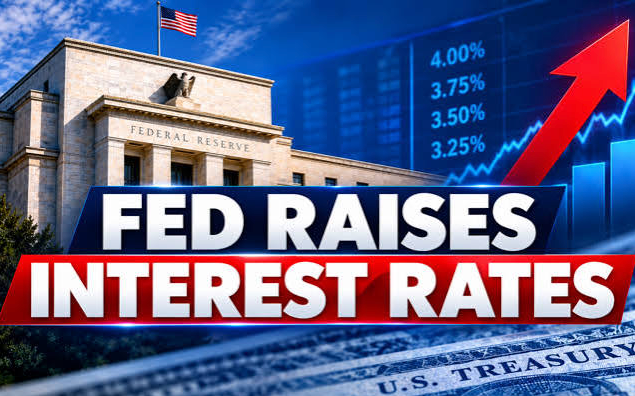
Have a credit card balance, plan to buy a car or keep money in savings? The Federal Reserve’s latest decision could affect you. The Fed raised its key interest rate by one quarter of a percentage point on September 16. It was the first increase since 2023 and brought the rate to about 3.9 percent. The goal is to slow spending and borrowing as inflation continues to run higher than the Fed would like. That may sound like something that only matters on Wall Street. But changes in this rate eventually reach many of the financial decisions people make every day. Credit cards could cost more Most credit cards have variable interest rates. When the Fed raises rates, card companies often follow. The increase may not look dramatic on your next statement. Someone carrying a balance of about $6,600 at a 22 percent interest rate could see the minimum payment rise by around $1.38 a month. But the bigger problem is that credit card rates were already high. If you carry a balance from month to month, even a small increase means more of every payment goes toward interest instead of paying down what you owe. This may be a good time to focus on your highest interest card, look for a lower rate option or avoid adding new charges that cannot be paid off quickly. Car loans may also move higher Auto loan rates could increase, although the change may take time to show up. A quarter point increase would probably add only a few dollars to the monthly payment on a typical vehicle loan. The larger issue is that new and used vehicle prices are already stretching many household budgets. If you are shopping for a vehicle, look at the total cost and not just the monthly payment. A longer loan can make the payment look better while leaving you paying much more interest over time. Mortgage rates are more complicated The Fed does not directly set mortgage rates. Mortgage rates are influenced more heavily by the bond market, inflation expectations and the outlook for the economy. That means they may rise, fall or remain steady even after the Fed changes its rate. Still, continued concern about inflation can keep mortgage rates elevated. Anyone buying a home should compare several lenders because even a small difference in the rate can add up over a 15 or 30 year loan. People with a fixed mortgage will not see their current rate change. Those with an adjustable rate mortgage or a variable home equity line could eventually pay more. Savers may finally see some benefit There is a good side to higher rates. Banks may increase what they pay on high yield savings accounts, money market accounts and new certificates of deposit. Some high yield savings accounts were already paying above 4 percent before the Fed acted. Do not assume your bank will automatically give you a better return. The national average savings account was paying only 0.63 percent shortly before the Fed’s announcement. Take a few minutes to check the rate on your account. Moving emergency savings to an insured high yield account could help your money earn more while remaining available when you need it. What should you do now? There is no need to make a sudden financial move because of one rate increase. Start by checking the interest rates you are currently paying and earning. Pay particular attention to credit cards and other variable rate debt. If you have money sitting in a low paying savings account, compare it with other insured options. The Fed’s decision may only change individual payments by a few dollars at first. But when borrowing is already expensive and household budgets are tight, those small changes can build over time.
September 8, 2026
Have you ever wondered how someone decides what a business is worth? It is not always as simple as looking at the profit shown on the financial statements. A buyer wants to know how much money the business is likely to produce after the current owner leaves. That is where EBITDA add backs enter the conversation. EBITDA is one way buyers measure the operating performance of a business. It looks at earnings before interest, taxes, depreciation and amortization. An add back removes an expense that is not expected to continue under new ownership. These adjustments can have a much larger effect than many business owners realize. Imagine that a company identifies a legitimate $100,000 expense that will disappear after the sale. If a buyer values the business at eight times its adjusted earnings, that one adjustment could potentially add $800,000 to the value. But the buyer is not simply going to accept every expense the owner wants removed. What Usually Counts The strongest add backs are specific, unusual and supported by records. A legal settlement that happened once may qualify. The same could be true for the cost of installing a new software system or repairing damage from a rare event. An expense that has nothing to do with the regular operation of the company may also be removed. One example would be a gain or loss from selling a piece of equipment or property. Owner compensation can sometimes be adjusted too. An owner may receive more than the company would need to pay someone else to perform the same job. That difference could count, but the owner needs real information showing what a replacement would cost. The basic test is simple. Will this expense still be there after the buyer takes control? If the answer is clearly no and the records support it, the adjustment has a better chance of surviving the buyer’s review. What Buyers May Reject Problems begin when an owner presents an estimate without evidence. A buyer will want to see invoices, payroll information, contracts or entries in the company’s accounting records. A round number based on memory or a general feeling will not carry much weight. Personal expenses paid by the business can also create trouble. They may be legitimate add backs, but the owner must be able to show that the expenses were truly personal and not necessary for operating the company. Another warning sign is an expense described as unusual that appears year after year. If the company regularly faces the same cost, the buyer may consider it part of doing business. Owners can also lose credibility by claiming an adjustment that is larger than the expense recorded in the books. Once a buyer finds one questionable number, the buyer may begin looking more closely at everything else. That uncertainty can reduce the price or slow down the entire sale. Preparation Should Begin Early The best time to prepare for a sale is before the business is on the market. Owners should document unusual expenses when they happen. A short explanation and supporting records can be much easier to produce today than several years later. Personal spending should be separated from business spending whenever possible. Agreements between the company and another business owned by the same person should also reflect normal market prices. Monthly financial statements need to be accurate and consistent. Revenue, bonuses, commissions and major purchases should be handled under clear accounting policies. This gives buyers confidence that the numbers reflect the real condition of the business. Owners should also think honestly about their own role. Can the company operate without them? Will someone need to be hired? How much will that person cost? Will the owner remain involved for a period after the sale? Those answers affect how much of the owner’s compensation can actually be removed from the company’s expenses. The Real Story Is About Trust Add backs are not just accounting adjustments. They help tell the buyer what the business may look like under new ownership. Good records make that story believable. Weak estimates create doubt. An owner who waits until a sale begins may spend valuable time trying to explain years of complicated transactions. An owner who prepares early can present a cleaner and more predictable picture.  That preparation could help protect the value built through years of work. When the time comes to sell, the numbers should make it easy for a buyer to see what the business can really produce.
September 1, 2026
Is it always smarter to pay cash for a car if you can afford it? Not necessarily. Avoiding a monthly payment can feel like the safest choice in retirement. You buy the car, eliminate the debt and have one less bill to worry about each month. But the bigger question is where that cash will come from. If you have enough money in savings to pay for the car and still maintain a healthy emergency fund, paying cash may make sense. You avoid interest charges and do not have to work a car payment into your retirement budget. The decision becomes more complicated if you need to pull a large amount from a retirement account. Money withdrawn from a traditional IRA or 401(k) is generally treated as taxable income. Taking out enough to buy a car could increase your tax bill. It may also push your income high enough to affect what you pay for Medicare in a future year. That means a $50,000 car could require a withdrawal of more than $50,000 once taxes are considered. Financing may allow you to spread those withdrawals over several years. It can also help you keep more cash available for medical expenses, home repairs and other unexpected costs. The interest rate matters too. If the loan has a high rate, paying cash becomes more attractive. If affordable financing is available and your money can remain invested or earning interest, financing may be worth considering. But future investment returns are never guaranteed. A possible return in the market should not automatically be treated as better than the guaranteed cost of a loan. The monthly payment also needs to fit comfortably within your retirement income. A car payment that forces you to withdraw more from savings every month could create another financial problem. The better choice is not simply cash or financing. It is the option that protects your taxes, monthly income and available savings. Before buying, look at the full cost of each option. Include the interest, possible taxes on withdrawals and how much cash you would have left afterward. A financial or tax professional can also help you understand how a large withdrawal could affect your specific situation.  Having enough money to pay cash does not always mean paying cash is the smartest move. In retirement, keeping your overall financial plan healthy matters more than avoiding one monthly bill. Source: Forbes
August 25, 2026
When you think about successful stocks, you probably think about big technology companies or businesses that seem to be in the news every day. But one of the most consistent companies in the stock market does something much less exciting. It provides water. American States Water recently increased its dividend by 8.2 percent. That marks the 72nd year in a row the company has given shareholders a larger annual dividend. The company has paid dividends every year since 1931. A dividend is money a company pays to people who own its stock. If you own shares, you may receive a payment every three months. It can provide income without requiring you to sell your investment. American States Water now pays about $2.18 per share annually. Its dividend has grown at an average annual rate of about 8.7 percent over the past decade. The stock currently has a dividend yield of around 2.5 percent. So how has a water company kept this going for so long? Water is something people need regardless of what is happening with the economy. American States Water operates regulated water and electric utilities. It also provides water services to military installations through long term government contracts. That does not mean the stock is guaranteed to go up or that its dividend will always increase. Utility companies spend heavily on pipes, treatment systems and other infrastructure. They can also be affected by debt, interest rates and decisions from government regulators. The larger lesson is not that everyone should rush out and buy this particular stock. It is that investing does not always have to be exciting. A business that provides an essential service, earns steady income and regularly shares some of that money with investors can quietly build wealth over time. Sometimes the companies getting the least attention are the ones doing the same important job year after year.
August 11, 2026
Thinking about buying a house? You are probably watching mortgage rates almost as closely as the price of the house itself. And right now, those rates are keeping a lot of people from making a move. Existing home sales fell 1.7 percent in July compared with June, according to new housing data released this week. That puts sales at an annual pace of about 4.06 million homes. That is the second straight monthly decline. The biggest problem is pretty simple. Buying a house is still expensive. Mortgage rates moved higher during July and recently reached around 6.7 percent for a 30 year mortgage. When rates rise, even a little, the monthly payment on a house can change enough to push some families out of the market. But here is the interesting part. Fewer sales have not necessarily meant cheaper houses. The median price of an existing home in July was about $434,100. That is 2 percent higher than a year ago and not far from the record set in June. There are also fewer homes available. About 1.54 million homes were on the market at the end of July, slightly fewer than both the previous month and a year ago. That creates an unusual situation. Buyers are struggling with high prices and high interest rates. At the same time, many homeowners who already have mortgages at much lower rates have little reason to sell their house and take on a new mortgage near 7 percent. So both sides are waiting. First time buyers may be feeling this the most. They represented only 29 percent of July home sales. Historically, that number has been closer to 40 percent. For anyone thinking about buying a home, the number to keep watching may not be home prices. It may be mortgage rates. A meaningful drop in rates could make monthly payments more manageable and bring more buyers back into the market. It could also convince more current homeowners that it is finally time to sell. Until then, the housing market may continue to feel like what it has become for many families. A waiting game.
July 29, 2026
E ven though the higher standard deduction limits make charitable deductions harder to find, there are still great options to find tax breaks within your charitable giving. Here are five tips to use charitable tax breaks: Qualified charitable distributions. If you’re age 70½ or older, you can transfer up to $100,000 (or a total of $200,000 for joint filers) directly from your IRA to a qualified charitable organization without paying any tax. Because distributions done this way are not subject to federal tax, it's like contributing with pre-tax dollars. Plus, your contribution counts as a required minimum distribution for tax purposes. Appreciated securities. Donate appreciated property (like securities) to a qualified charity and you can deduct the current fair market value (FMV) of the property if you’ve owned them longer than a year. For example, if you acquired stock three years ago for $7,500 and it’s now worth $10,000, you can donate it and deduct the entire $10,000 FMV if you itemize your deductions. There’s no capital gains tax on the $2,500 appreciation in value – ever! This is a great strategy if you are close to or over the itemized deduction threshold in a given year. Bunching donations. Under current tax law, the standard deduction is more than double the historic rates, effectively lowering the amount of taxpayers who will itemize their deductions. As a result, it now makes sense to “bunch” large gifts of property, like securities (see #2), in a tax year in which you expect to itemize. Conversely, if you don’t anticipate itemizing in the current tax year, you may consider postponing donations into the next year. The idea is to get the most tax deductions possible over a multiyear period. Leverage the new charitable deduction rule. Beginning in 2026, you can now directly deduct charitable contributions without itemizing. The amount is $1,000 ($2,000 for a married filing joint tax return). Consider a Donor Advised Fund (DAF). This idea is to be used in conjunction with tips 2 and 3. With this idea, you create a Donor Advise Fund. You then donate appreciated assets (stocks) into the fund (tip 2). You donate enough in one year to exceed the standard deduction for that year (tip 3). You then donate your funds out of the DAF over the years. While the money is no longer yours, you still control what qualified charities receive the money. Note: You cannot use a DAF to qualify for the new, non-itemized charitable giving rule outlined in tip 4.  With each of these ideas, it's essential to follow the rules when donating. If not, your good intentions may not be deemed a qualified donation for tax purposes. Ask for help if you'd like to review your situation.
July 22, 2026
Every time a big tech company talks about AI, one number seems to grab all the headlines. Spending. Google's parent company, Alphabet, is pouring an enormous amount of money into new data centers, servers, and AI infrastructure. But here's what is surprising. The company is making money even faster than it is spending it. Alphabet reports earnings after the market closes today, and investors will be watching one question more than any other. Can profits continue to grow while AI spending keeps accelerating? So far, the answer has been yes. In the first quarter, Alphabet's revenue increased 22 percent while operating income jumped 30 percent. Its operating margin reached its highest level in five years, helped by strong growth in both Google Search and Google Cloud. Cloud revenue alone jumped 63 percent, giving the company another major source of profits beyond advertising. At the same time, the price tag for AI keeps getting bigger. Alphabet spent nearly $36 billion last quarter building AI infrastructure, and Wall Street expects that number to climb to around $44 billion this quarter. The company has already said it could spend as much as $190 billion this year, with even higher spending expected next year. Why does this matter to everyday investors? Because AI is becoming one of the biggest bets in business history. These companies are investing now with the expectation that AI products will generate years of future revenue. If that happens, today's spending could look like a smart investment. If not, investors may begin questioning whether the costs have become too high. Reuters recently reported that AI spending across the biggest technology companies is expected to outpace growth in free cash flow over the next few years, making future earnings even more important. The latest earnings report won't just tell us how Google performed over the last three months. It will also give investors another clue about whether the AI boom is paying off or whether the bill is finally starting to catch up.
July 1, 2026
Graduate students planning to borrow federal student loans should be aware of important changes that took effect on July 1. A last minute court ruling also changed who qualifies for higher borrowing limits, creating uncertainty for some degree programs. For years, many graduate students relied on Graduate PLUS Loans to help cover the full cost of attendance. Under the new rules, those loans are no longer available for new borrowers. Instead, most graduate students will use Direct Unsubsidized Loans, which have annual and lifetime borrowing limits. For most graduate degree programs, federal borrowing is now limited to $20,500 per year, with a lifetime cap of $100,000. Students enrolled in qualifying professional degree programs can borrow up to $50,000 per year, with a lifetime limit of $200,000. Just before the new limits went into effect, a federal judge temporarily blocked the U.S. Department of Education's narrow definition of what qualifies as a professional degree. As a result, students enrolled in several programs, including nursing, psychology, and divinity, remain eligible for the higher borrowing limits while the case moves through the courts. Theology programs, however, fall under the lower borrowing limits based on the current guidance. Because this ruling is temporary, eligibility could change again depending on the outcome of the legal challenge. For students beginning graduate school, these changes may affect how they pay for their education. Those whose programs qualify for the higher borrowing limits may have additional access to federal funding. Others may need to explore scholarships, assistantships, employer tuition assistance, payment plans, or private student loans to help bridge the gap between federal loan limits and the total cost of attendance. If you are planning to start graduate school or are considering returning for an advanced degree, now is a good time to review your financial aid package carefully. Contact your school's financial aid office to confirm how these changes apply to your specific program and discuss your options before borrowing.  As federal student loan policies continue to evolve, staying informed can help you make better financial decisions and avoid unexpected funding challenges.
June 17, 2026
One of the more surprising financial stories making headlines this week comes from Jeff Bezos. The billionaire entrepreneur is arguing that the bottom half of American earners should pay zero federal income tax. At first glance, that may sound like an idea you would expect from a politician rather than one of the world's wealthiest business leaders. But Bezos says many working Americans are struggling with housing costs, groceries, and everyday expenses, and believes eliminating their federal income tax burden would give them a better chance to get ahead. The idea is simple. Instead of lowering taxes for lower income workers, he wants to eliminate federal income taxes altogether for roughly the bottom 50 percent of earners. According to tax data cited in recent reports, that group currently contributes only a small percentage of total federal income tax revenue. For the average person, the immediate question is obvious: How much money are we talking about? The answer depends on income, family size, deductions, and credits. Many lower income households already owe little or no federal income tax because of existing deductions and tax credits. Because of that, analysts say the biggest benefits would likely go to middle income households rather than the very lowest earners. A similar proposal currently being discussed in Congress would eliminate federal income taxes for many individuals earning less than $46,000 and married couples earning less than $92,000, while also reducing taxes for many middle income families. Of course, the challenge is paying for it. Reducing or eliminating taxes means the federal government would collect less revenue. Some lawmakers have suggested offsetting the cost by increasing taxes on households earning more than $1 million per year. Others argue the focus should be on reducing government spending instead. What makes this story important is not whether the proposal ultimately becomes law. The chances of any major tax overhaul making it through Congress remain uncertain. The bigger story is that conversations about who pays taxes, how much they pay, and whether the tax system should be reshaped are becoming more common across the political spectrum. For many Americans, especially those feeling squeezed by higher living costs, the idea of keeping more of each paycheck is easy to understand.  Whether that happens through tax cuts, spending reforms, or some combination of both will likely remain part of the national debate for years to come.
June 3, 2026
Now that your tax return has been filed, it is a good time to ensure you have proper documentation to substantiate your tax deductions, in the instance you are examined by the tax authorities. This is important as many banks start deleting online documentation that is more than a year old. Background The use of paper checks is changing dramatically over the past ten years. This shift has greatly reduced the ability to have a canceled check as proof when the auditor comes calling. This is due to more people using credit cards, digital currency, and the advent of online bill paying services. With online bill paying, your only receipt is often just an entry in your checking account. And current laws allow banks to digitally capture checks and then destroy the paper copy without returning it to you. So what do you do if you need proof that you paid for a tax deductible item? Know what the Tax Authorities are looking for Proof of a deduction typically requires two things: An invoice or proof of the transaction. This comes from the organization your activity is related to like a church or charitable organization and is dated and detailed enough to show what the transaction entailed. Proof of payment. This is where the check or detailed proof of payment is required. Some Tips Know your bank. Understand what your bank keeps and for how long. This includes digital statements and digital copies of checks (both front and back). Understand if there are any fees charged if you need to request copies of payments. Retain copies of all bank statements. Review your records to ensure you have copies of all monthly bank statements. This is often the starting point for an IRS agent that wants proof of payment, so it should be yours as well. These copies may be in either paper or digital format. Download online copies of your statements and place them in a password protected file. Collect copies of tax-related proof of payment. Go through your statements and mark the payments that will, in all likelihood, be used as a tax deduction. Make sure you have copies of the front and back of each of these payments. If you do this work now, the copies are often still available online for no fee. Even online bill payments often have a digital copy that can be used. Get independent acknowledgements. If you have larger payments you should also make sure you have independent acknowledgement from the merchant or organization to substantiate the deduction. This is true for charitable contributions of $250 or more, and any business or medical expenses.  While having the traditional proof of an expenditure is now harder to come by, the IRS and State tax authroties understand that and are aware technologies are changing the type of substantiation available for them to review. Retain documentation throughout the year that will support your transaction. This will save you a lot of headaches should you ever need to prove your deductions.
More Posts